Sustainability
In accordance with applicable laws and regulations, international sustainability trends, and the expectations of customers and suppliers regarding social and environmental responsibility, MetaAge has established the “Sustainable Development Code of Practice” as the overarching framework for promoting sustainability and implementing related policies across the Company.
To implement sustainable business practices and corporate social responsibility, while continuously enhancing the quality of sustainability disclosures, MetaAge manages and discloses sustainability-related matters across eight key areas: operational and financial performance; risk management; corporate governance and integrity management; information security and personal data protection; supply chain and customer relationship management; workplace/employee well-being; social inclusion; and environmental and climate governance.
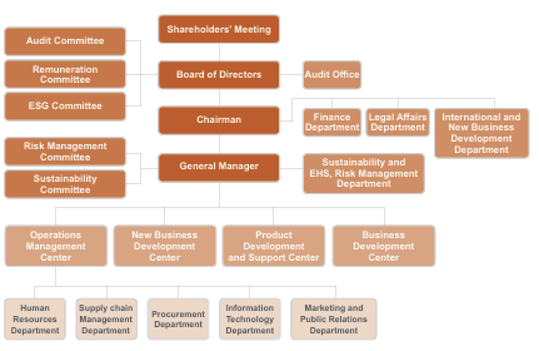
At MetaAge, sustainability is integral to how we govern and operate our business. MetaAge has established a sustainability governance structure overseen by the Board of Directors and supported by participation across management levels, ensuring that sustainability principles are integrated into day-to-day operations and decision-making. It is embedded across our management practices, stakeholder engagement, and long-term value creation, supporting our commitment to responsible and sustainable growth.
The Sustainability Development Committee serves as the Company's decision-making and oversight body for sustainability-related matters, covering the three dimensions of Environmental (E), Social (S), and Governance (G). Through its oversight, the Committee supports the Board of Directors in fulfilling its responsibilities to safeguard the interests of the Company, employees, shareholders, and other stakeholders.
The Committee consists of five members, including three independent directors. Its members possess expertise in areas including sustainability governance, sustainable supply chain management, sustainability strategy, and green transformation, enabling the Committee to effectively review and oversee the Company's sustainability-related matters.
At the management level, MetaAge has established a Sustainability Committee, chaired by the President, with the head of the Sustainability & EHS Risk Management Division serving as Secretary-General. The Committee comprises heads of key functions, including product, sales, finance, supply chain, information technology, legal, and human resources.
The Sustainability Committee is responsible for implementing sustainability strategies and annual objectives, coordinating cross-functional collaboration, and regularly reporting sustainability progress to the Board-level Sustainability Development Committee. This structure supports the effective implementation and integration of sustainability initiatives across the Company.
The Sustainability & EHS Risk Management Division serves as MetaAge's dedicated sustainability function. It is responsible for advancing environmental sustainability initiatives, coordinating greenhouse gas inventories, identifying climate-related risks and opportunities, and managing sustainability-related disclosures.
The Human Resources Department of the Operations Center supports office environmental management, energy conservation and emissions reduction initiatives, and related employee training, jointly supporting the implementation of MetaAge's climate governance and environmental management practices.
Through clearly defined responsibilities, ongoing oversight and monitoring, and comprehensive management mechanisms, MetaAge translates sustainability objectives into concrete actions and measurable outcomes, strengthening the integration of sustainability into our business operations and long-term development.
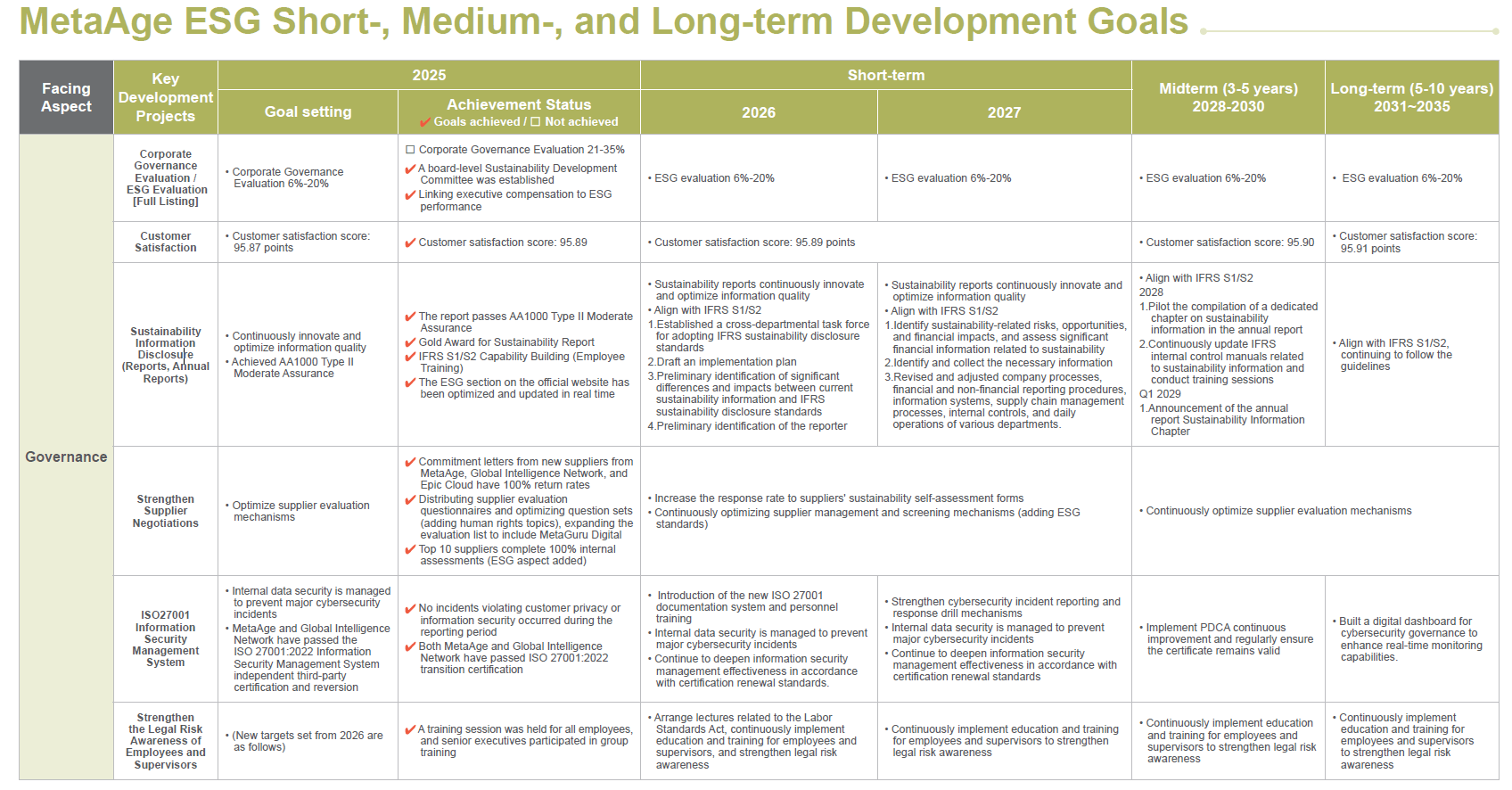
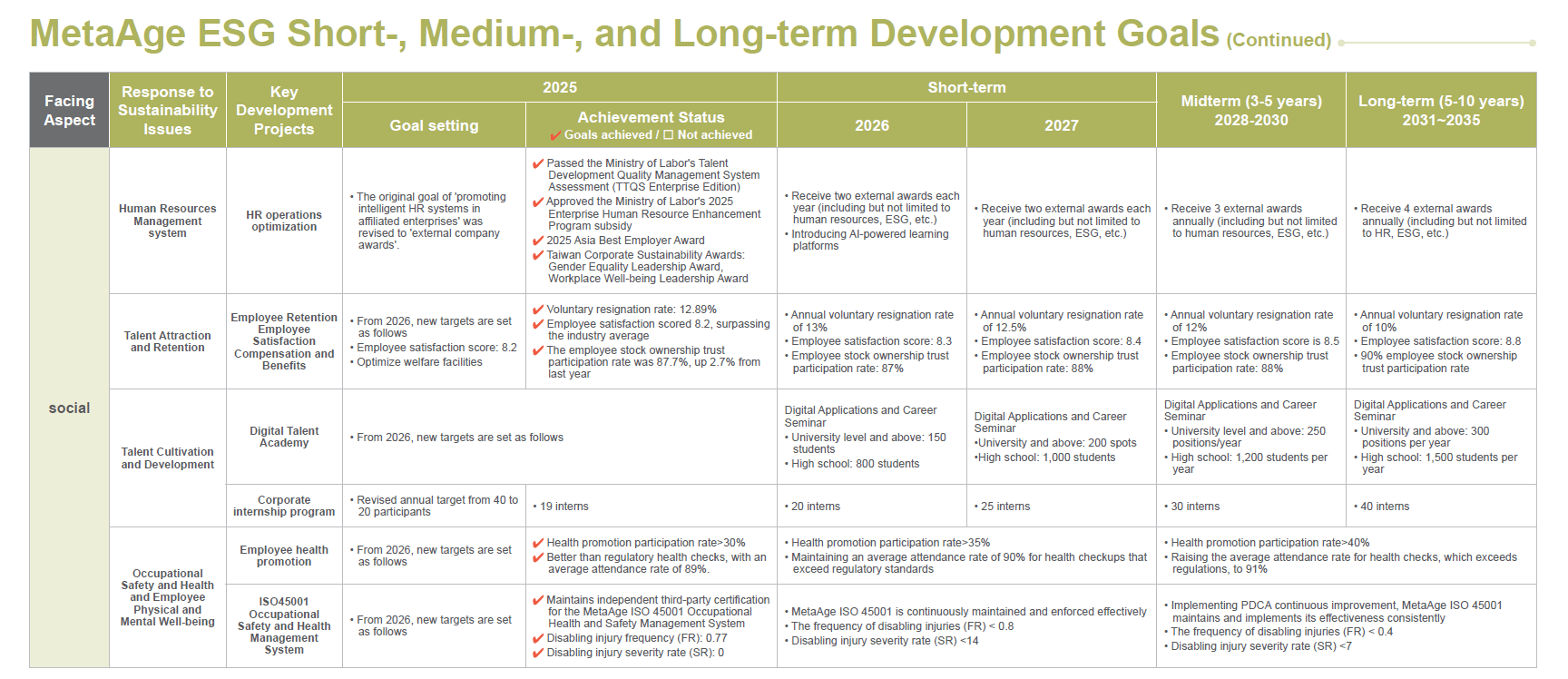
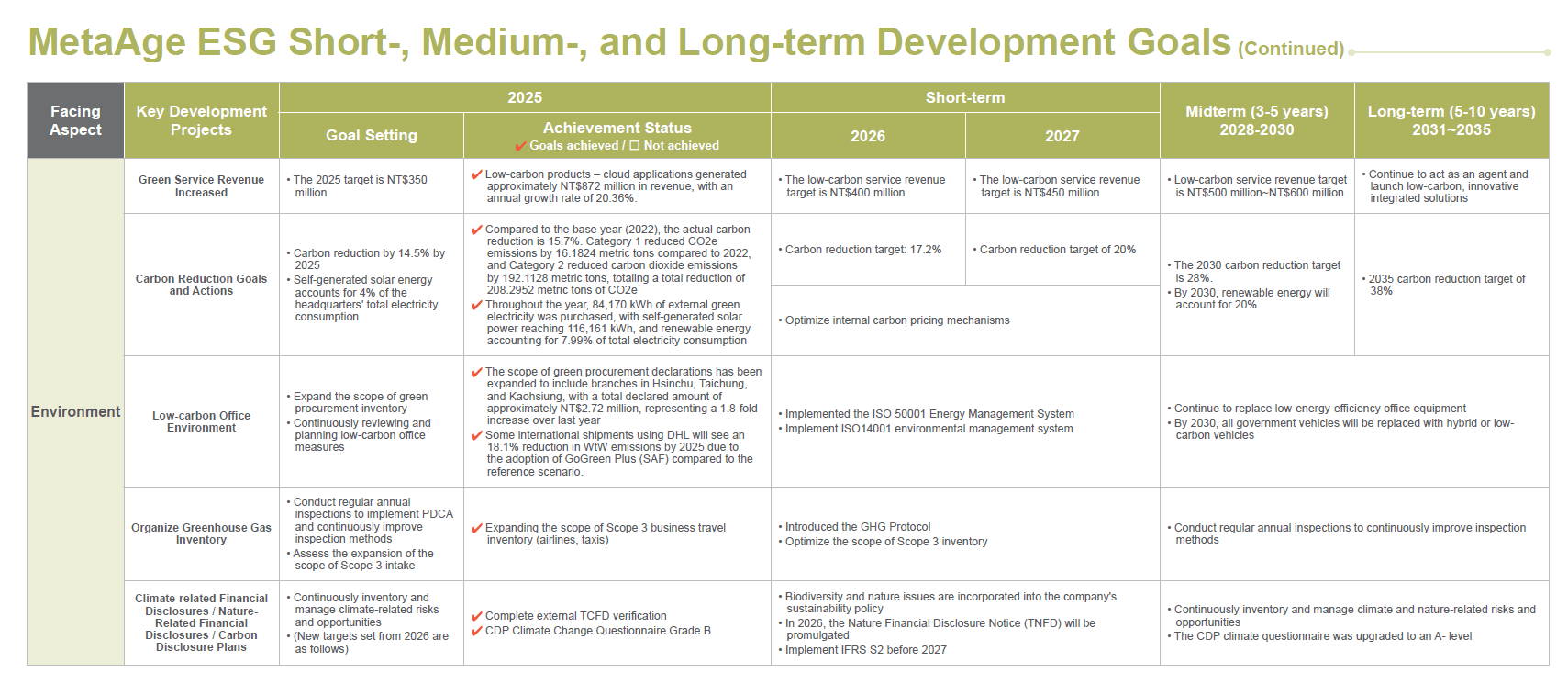
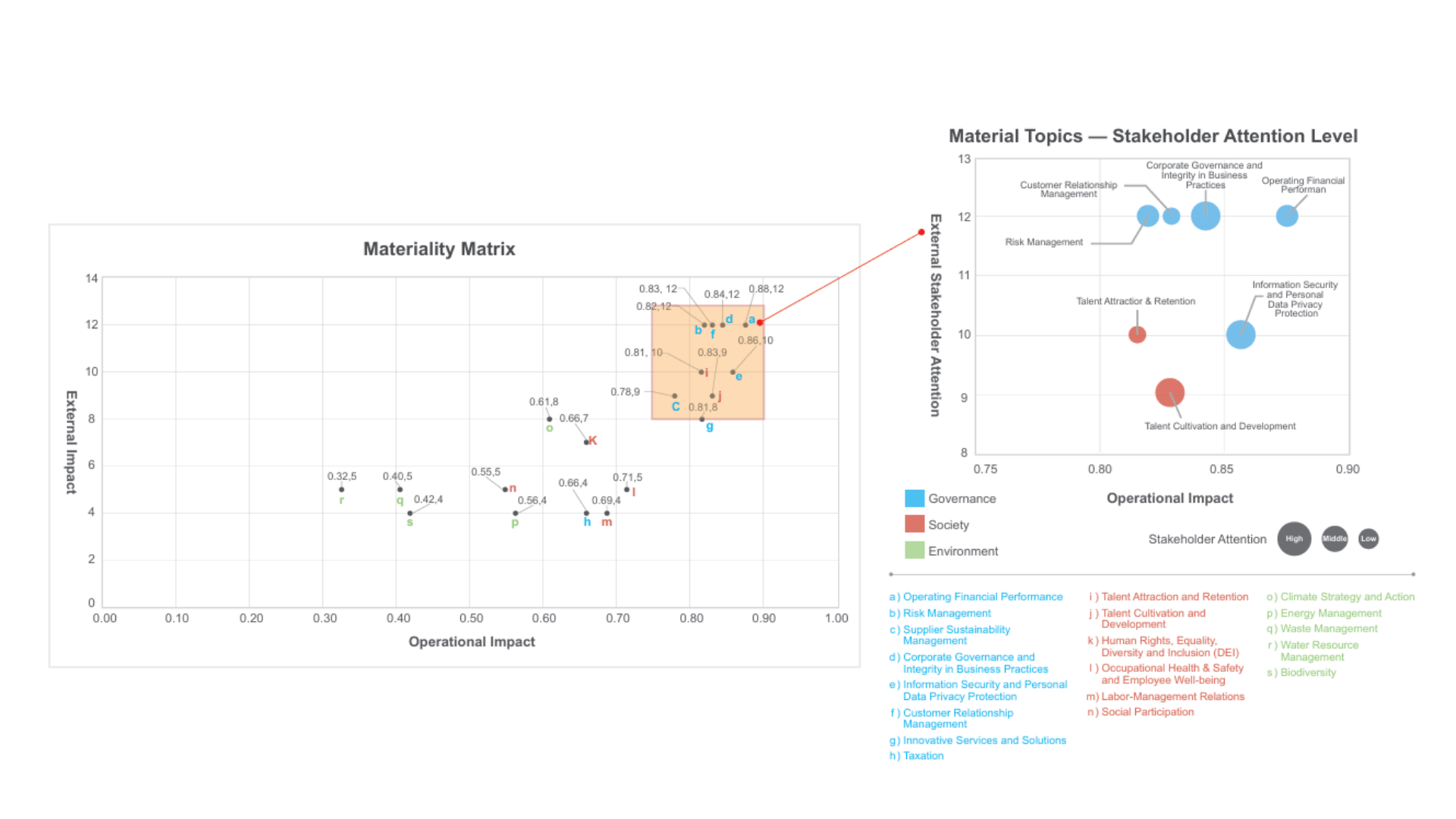
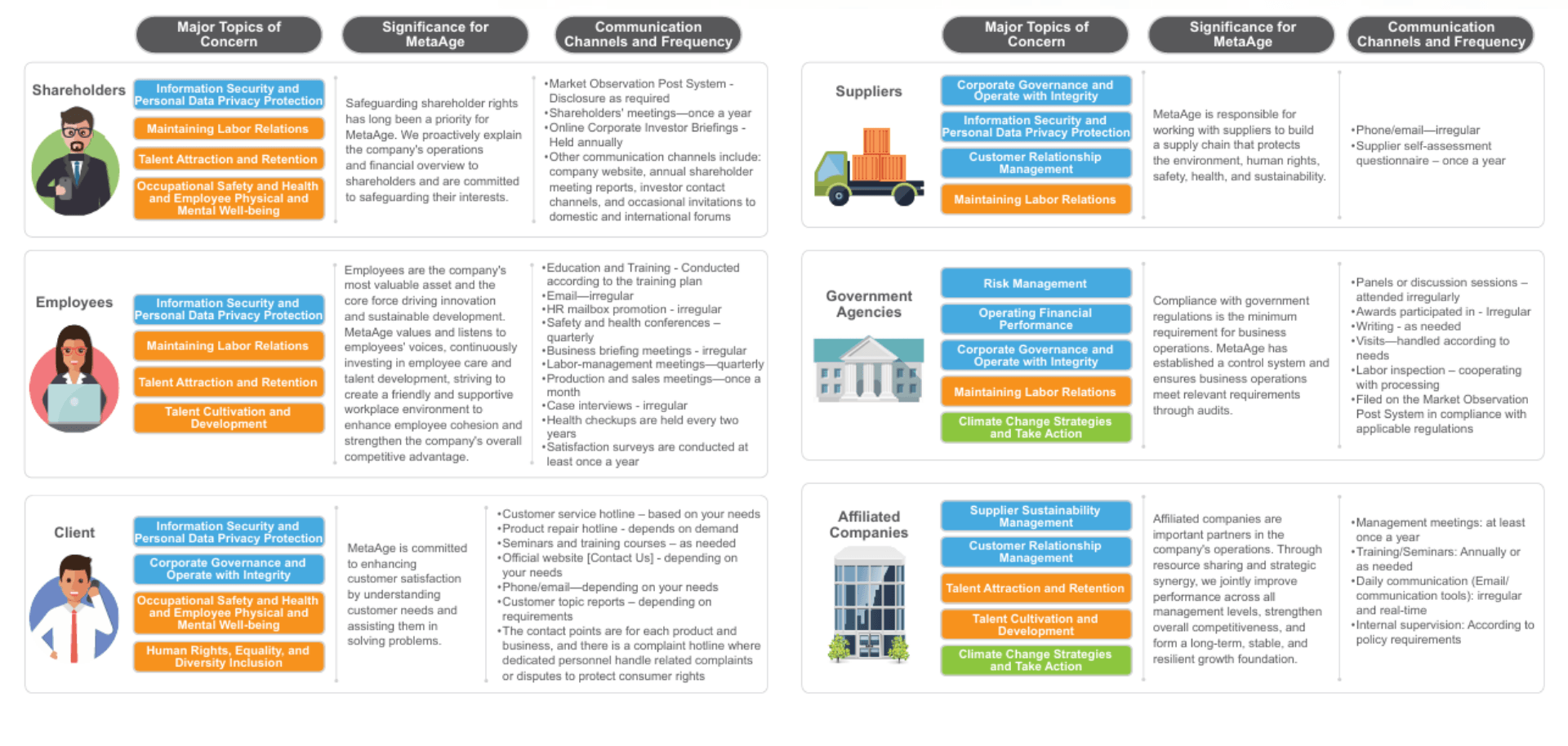
MetaAge conducts a materiality assessment on a regular basis, with participation from senior management across functions, the sustainability team, the highest governance body, and stakeholders. The assessment considers the impacts of sustainability topics on the MetaAge’s internal operations and on the external environment, society—including human rights—and the economy, while also taking into account stakeholders’ level of interest in sustainability-related issues. Through this process, MetaAge identifies its material topics to determine the key areas of focus for its annual response and guide internal sustainability management and actions.
The assessment evaluates three dimensions—operational impact, sustainability development impact, and stakeholder interest. Based on the significance of the identified impacts, topics are categorized into three levels: high, medium, and low impact. This approach enables MetaAge to prioritize sustainability topics that have significant internal or external impacts and are of material interest to stakeholders.
The matrix below illustrates the internal and external impacts associated with MetaAge's 2025 sustainability topics, together with the level of stakeholder interest for each material topic.
Based on the materiality threshold, six topics, including talent attraction and retention, information security and personal data privacy protection, risk management, corporate governance and ethical business practices, and operational and financial performance, were initially identified as material topics. In addition, considering that the sustainability development impact assessment identified customer relationship management as having a primary impact, and that the annual risk assessment identified domestic and international sustainability-related as well as customer evaluation requirements. Therefore, customer relationship management continues to be recognized as a material topic.
As a result, MetaAge identified a total of seven material topics for 2025 and developed a materiality matrix accordingly. The results were reported by the sustainability unit to the Sustainability Committee for review and serve as the basis for the key disclosures in this report and for establishing ESG goals and performance indicators.