Sustainability
MetaAge adopts the framework of the Task Force on Climate-related Financial Disclosures (TCFD) issued by the Financial Stability Board (FSB) to conduct relevant information disclosures across four major areas: governance, strategy, risk management, and metrics and targets. At the same time, the Company identifies its material risks and categorizes their sources into two major types:
(1) Transition risks arising from the economic transition toward addressing climate change
(2) Physical risks arising from direct impacts caused by climate change or extreme weather events.
Through the TCFD disclosure framework and risk identification process, MetaAge enhances the transparency of climate-related information, enabling stakeholders to understand and assess climate-related risks and opportunities.
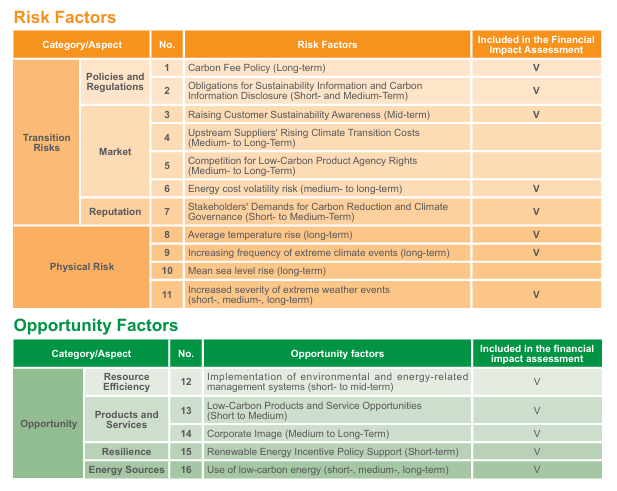
The identification of climate-related risks and opportunities forms part of MetaAge’s overall risk management and is incorporated into its existing risk identification, assessment, and control processes over the long term. Based on the classification of risks and opportunities, MetaAge identified a total of 16 climate-related risk and opportunity factors, as shown in the table below:
1. Risks are divided into two major categories: transition risks and physical risks. Transition risks cover three areas—policy and legal, market, and reputation—with a total of seven risk factors identified. Four physical risk factors were also identified.
2. Opportunities are assessed across four areas: resource efficiency, products and services, resilience, and energy sources, with a total of five opportunity factors identified.
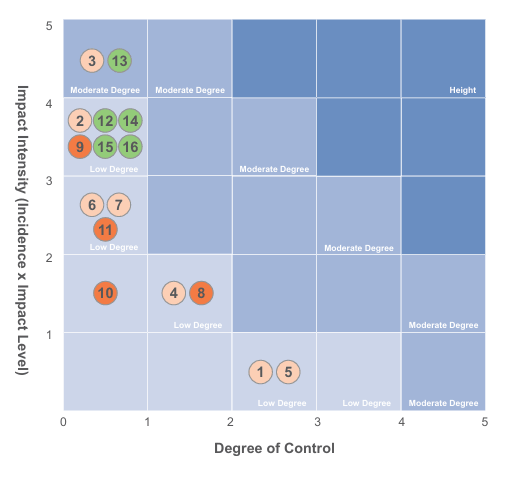
MetaAge established a climate risk and opportunity matrix based on the degree of impact, likelihood of occurrence, and degree of control of the 16 risk and opportunity factors. The assessment results for increased customer sustainability awareness (risk) and low-carbon products and services opportunities (opportunity) reached a moderate level and were therefore included within the scope of the financial impact analysis disclosed in this report.
For the remaining climate-related risk and opportunity items, MetaAge further assesses factors including the completeness of relevant data and the level of stakeholder concern. MetaAge determines whether to include each item in the financial impact assessment based on the following five financial analysis criteria:
1. Level of risk or opportunity (moderate or above);
2. Data availability and quantifiability;
3. Strong linkage to cash flow, capital expenditures, and operating costs;
4. High level of internal attention within the Company; and
5. Concern from external stakeholders (investors) or regulatory requirements.
Based on these criteria, MetaAge determines whether each item should be included in the financial impact assessment. The assessment results are presented below.