Sustainability
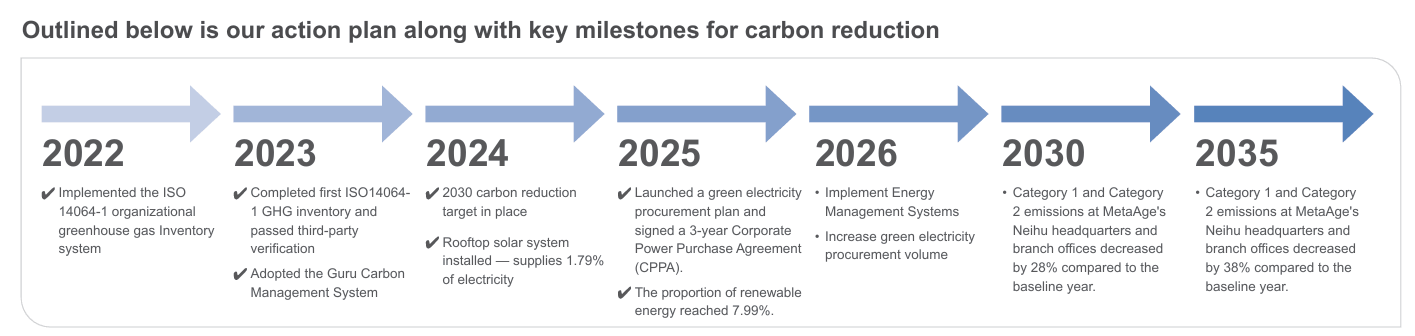
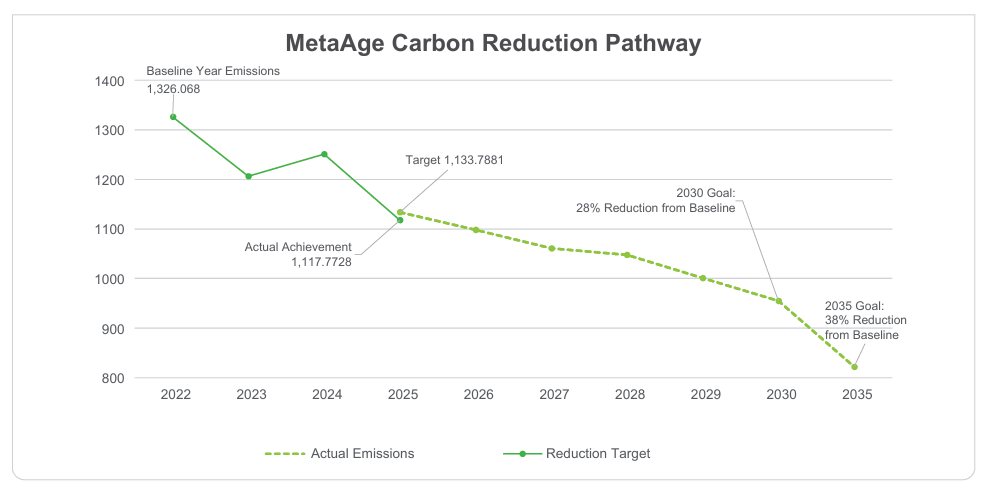
To align with the national 2050 net-zero target and the Financial Supervisory Commission’s sustainability development roadmap, MetaAge has, since March 2022, referred to the ISO 14064-1 international standard for organizational greenhouse gas inventories to establish a greenhouse gas inventory management system for the Company and its consolidated financial reporting entities. Through standardized and systematic management, the Company inventories greenhouse gas emissions across various categories, including the seven major greenhouse gases: carbon dioxide (CO₂), methane (CH₄), nitrous oxide (N₂O), hydrofluorocarbons (HFCs), sulfur hexafluoride (SF₆), nitrogen trifluoride (NF₃), and perfluorocarbons (PFCs).
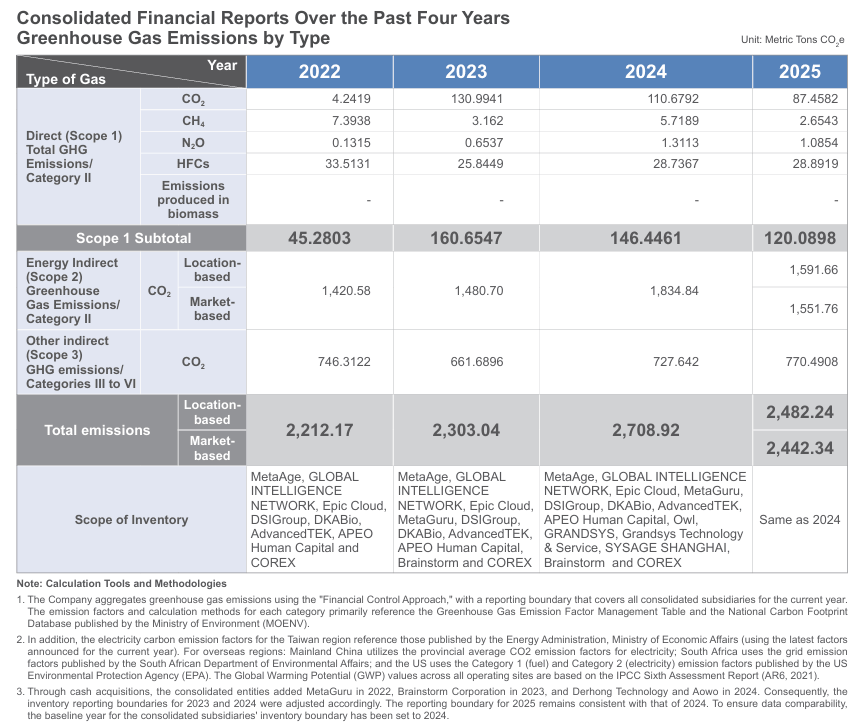
In 2025, the total annual greenhouse gas emissions of MetaAge and its consolidated financial reporting entities were 2,482.238 metric tons of CO₂ equivalent on a location-based basis and 2,442.342 metric tons of CO₂ equivalent on a market-based basis. During the reporting period, the Company primarily generated four types of greenhouse gases: carbon dioxide (CO₂), methane (CH₄), nitrous oxide (N₂O), and hydrofluorocarbons (HFCs). A summary of emissions by greenhouse gas type over the past four years is shown in the chart below.
Verification Statement